Beyond Today, Into Tomorrow

Beyond Today, Into Tomorrow
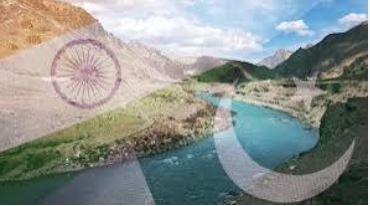
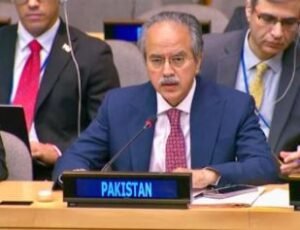
United Nations: Pakistan has formally brought the issue of alleged violations of the Indus Waters Treaty (IWT) by India before the United Nations Security Council (UNSC), calling for international attention to what it describes as growing risks to regional stability and water security in South Asia.According to a press release from Pakistan’s UN mission, Ambassador Asim Iftikhar Ahmad on Friday submitted a letter from Deputy Prime Minister and Foreign Minister Senator Ishaq Dar to Ambassador Leonor Zalabata Torres of Colombia, who is serving as President of the Security Council for the month of June.The letter highlights Pakistan’s concerns over what it terms India’s “illegal actions” related to water infrastructure projects on the Chenab River system, which Pakistan believes could impact the flow of rivers governed under the 1960 World Bank-brokered Indus Waters Treaty. Pakistan Flags Concerns Over Water Flow and Treaty Compliance In its communication to the Security Council, Pakistan raised alarm over two infrastructure projects allegedly linked to India’s utilization of the western rivers allocated under the Indus Waters Treaty framework.According to Beyond Time News, the letter argues that these developments indicate an intention to alter the natural flow of treaty-protected rivers, raising concerns over potential water diversion and long-term implications for downstream water availability.Pakistan warned that any attempt to “weaponize water” could have serious consequences for food security, agriculture, and economic stability, particularly in a country heavily dependent on the Indus river system for irrigation and power generation.The letter urged the 15-member Security Council to take cognizance of what it described as a “fragile and deteriorating situation” and called for accountability regarding alleged treaty violations.Indus Waters Treaty Faces Fresh Challenges Amid India’s Water Projects, Says Mohsin Leghari Pakistan Links Water Dispute to Regional Stability During his engagement with the UNSC President, Ambassador Asim Iftikhar Ahmad also briefed her on broader regional developments in South Asia, including Pakistan’s long-standing concerns over the unresolved Jammu and Kashmir dispute.According to Beyond Time News, Pakistan reiterated its position that India has not complied with relevant United Nations Security Council resolutions regarding the disputed territory.Diplomatic sources say Pakistan views water-sharing arrangements under the Indus Waters Treaty as closely linked to regional peace and stability, given that both India and Pakistan rely on interconnected river systems originating from the Himalayas. Ishaq Dar Warns Against “Weaponisation” of Water The diplomatic move comes shortly after Deputy Prime Minister and Foreign Minister Ishaq Dar addressed an international conference in Brussels focused on transboundary water governance.Dar warned that using shared water resources as a tool of pressure or coercion could undermine regional peace and global stability.He stressed that international treaties and cooperative frameworks must remain central to managing cross-border rivers, arguing that water should serve as a source of cooperation rather than conflict.According to Beyond Time News, the Brussels conference—titled “Transboundary Water Resources: A Weaponised Global Common”—was jointly organized by the Centre for European Policy Studies (CEPS) and the Embassy of Pakistan in Brussels.The event brought together policymakers, climate experts, and international researchers to discuss challenges related to shared water governance and climate-driven resource stress. Indus Waters Treaty at the Center of Dispute The Indus Waters Treaty, signed in 1960 with the mediation of the World Bank, is widely regarded as one of the most durable water-sharing agreements between two nuclear-armed neighbors: India and Pakistan.Under the treaty, the eastern rivers are allocated primarily to India, while the western rivers are largely reserved for Pakistan, with certain usage rights granted to India under specific conditions.Despite surviving multiple wars and decades of political tension, the treaty has frequently been a subject of diplomatic disputes over interpretation, infrastructure development, and water usage rights.Pakistan’s latest move at the United Nations signals a renewed effort to internationalize concerns over compliance and implementation of the agreement. Growing Diplomatic Tensions in South Asia Water security has increasingly become a sensitive issue in South Asia, where climate change, population growth, and rising agricultural demand are placing additional pressure on shared river systems.Experts say that any dispute involving upstream infrastructure projects carries significant downstream implications, particularly for Pakistan’s irrigation-dependent economy.Islamabad has consistently maintained that strict adherence to treaty obligations is essential for regional peace, while calling for dialogue and international oversight mechanisms to prevent escalation. Calls for International Attention Pakistan’s appeal to the UN Security Council reflects its broader diplomatic strategy of seeking international engagement on issues it considers critical to regional stability.By raising the matter at the UNSC level, Pakistan aims to draw attention to what it sees as potential risks to treaty enforcement and cross-border water management.According to officials cited by Beyond Time News, the objective is to ensure that international forums remain informed about developments that could affect peace and security in South Asia. Conclusion The latest development underscores ongoing tensions between India and Pakistan over water-sharing arrangements and broader geopolitical disputes. While the Indus Waters Treaty has historically been viewed as a model of cooperation, recent diplomatic exchanges suggest increasing strain over its interpretation and implementation.As climate pressures intensify and regional mistrust persists, water governance is likely to remain a key issue in South Asian diplomacy. FAQs What is the Indus Waters Treaty? The Indus Waters Treaty is a 1960 agreement between India and Pakistan, brokered by the World Bank, that governs the distribution and use of rivers in the Indus basin. Why did Pakistan approach the UN Security Council? Pakistan raised concerns over alleged violations of the treaty by India, claiming that certain infrastructure projects may affect river flows and regional stability. What is Pakistan’s main concern? Pakistan fears that changes to river usage or diversion could impact agriculture, water availability, and economic stability. Has India responded to these allegations? No response from India was included in the reported communication referenced in the available material. Why is water a sensitive issue between India and Pakistan? Both countries depend heavily on shared river systems, making water distribution a critical issue for agriculture, energy production, and national security. Hashtags #Pakistan #India #UNSC #IndusWatersTreaty #WaterSecurity #SouthAsia #IshaqDar #UN #Diplomacy #BreakingNews #InternationalRelations #ClimateSecurity

Poonch: An Indian Army soldier was killed in a reported accidental firing incident at a military camp in the Surankote area of Poonch district in Indian illegally occupied Jammu and Kashmir (IIOJK), officials said on Thursday. Authorities have launched an inquiry into the circumstances surrounding the incident.According to Beyond Time News, the incident took place during the early hours of the day at the headquarters of the 16 Rashtriya Rifles in Draba, a sensitive operational area in the region.The death has prompted internal investigations as the Army seeks to determine how the fatal discharge occurred during night duty. Soldier Identified as ASC Personnel Attached to Rashtriya Rifles Officials identified the deceased as Naik B.D. Rao, a member of the Army Service Corps (ASC), who was attached to the 16 Rashtriya Rifles unit.He was reportedly on night duty at the time of the incident. The firing occurred inside the camp premises, officials said.Early reports suggest the soldier was found dead at his post. However, the exact sequence of events has not yet been confirmed by authorities. Body Shifted for Medico-Legal Procedures After the incident, the body was shifted to the Government Sub-District Hospital in Surankote. Medico-legal formalities were carried out as part of standard procedure.Security officials have not issued detailed public statements about the weapon involved or the condition in which the incident occurred.The area remained under controlled security protocols following the incident.Four Indian Army Personnel Injured in Blast Near LoC in Rajouri Inquiry Initiated to Determine Cause Military authorities have ordered a formal inquiry into the incident. The investigation aims to establish whether the death resulted from accidental firing or any other factor.Officials said the findings will be released after the inquiry is completed. At this stage, no final conclusion has been made.According to Beyond Time News, preliminary inputs classify the case as an accidental firing incident, but confirmation depends on investigative results.The probe is expected to examine duty records, weapon handling procedures, and statements from personnel stationed at the site. Standard Investigation Procedures Underway Security forces typically follow a structured process in such incidents. This includes inspection of the site, forensic review, and verification of service records.Officials are also expected to assess whether safety protocols were followed during night duty hours.No indication of external involvement or foul play has been officially suggested at this stage. Rising Attention on Non-Combat Military Deaths The incident has once again drawn attention to non-combat fatalities among security personnel deployed in IIOJK.Over the years, the region has witnessed reports of accidental firings, suicides, and other service-related deaths within military ranks.While each case is investigated individually, such incidents often raise broader questions about operational stress and long deployments in sensitive areas.Military analysts note that personnel deployed in high-alert zones operate under continuous security pressure. Night duties, rotating shifts, and rapid response requirements form part of routine operations. Operational Stress and Duty Conditions Service in conflict-sensitive regions requires sustained alertness. Soldiers often remain on duty for extended periods with limited rest.Experts say that such conditions demand strict adherence to safety procedures. They also highlight the importance of regular training and supervision during weapon handling.Military institutions have increasingly focused on improving welfare systems for deployed personnel. These include counseling support, rest cycles, and structured command oversight.However, operational realities in active security zones continue to present challenges for forces on the ground. Investigation Findings Awaited Authorities have not confirmed whether any procedural lapse or technical issue contributed to the incident. The inquiry is still in its early stages.Officials said all aspects of the case will be reviewed before conclusions are drawn. Statements from witnesses and duty personnel will also form part of the investigation.According to Beyond Time News, further details are expected once the internal review progresses. Incident Highlights Ongoing Security Challenges The death of Naik B.D. Rao has once again highlighted the risks faced by personnel stationed in high-security environments.While combat operations remain a known risk, non-combat incidents continue to form a significant part of military casualty reports in sensitive regions.The Army maintains that each case is treated with seriousness and investigated thoroughly to prevent recurrence.As the inquiry continues, authorities are expected to focus on determining the exact cause and reinforcing safety measures where necessary.For now, officials describe the incident as a reported case of accidental firing, pending final confirmation from the investigation team. Conclusion The incident in Poonch has triggered a formal military probe and renewed discussion on operational safety in sensitive deployment zones. The findings of the inquiry will determine the exact circumstances behind the soldier’s death and whether any corrective measures are required.

Jeddah: Saudi Arabia has introduced updated regulations for instant work visas through its Qiwa platform, tightening eligibility requirements for businesses while streamlining the foreign worker recruitment process. According to local media reports, the Ministry of Human Resources and Social Development has revised visa allocation limits based on the size, compliance status, and operational history of companies applying to hire overseas employees. The new framework is designed to ensure better regulation of the labour market while aligning recruitment practices with the Kingdom’s Saudization goals.Revised Visa Limits for Businesses Under the updated rules, newly established companies operating for less than two years will now be eligible for a maximum of five instant work visas. Businesses that have been active for more than two years will be allowed to apply for up to 50 instant visas. These may be issued through a single application or multiple applications submitted within a week at the company level. According to the Qiwa platform, companies registered under the establishment support program will initially receive two visas. However, this allocation may be increased if the business demonstrates improved compliance and achieves higher Saudization rates. Officials say the revised system is intended to ensure that work visa allocations are tied more closely to workforce localisation performance and regulatory compliance. Pakistan, Somalia sign agreement abolishing visas for diplomatic passport holdersStrict Eligibility Conditions Introduced The Qiwa platform has outlined 10 key conditions that companies must meet before they can recruit non-Saudi workers from abroad. According to the requirements, the establishment must be actively operating, and all employees must hold valid work permits. The company’s commercial registration must also be valid, unless exempted under applicable regulations. Businesses must fall within the Medium Green category or higher under the Saudization programme and must comply fully with the Wage Protection System without outstanding violations. In addition, companies are required to maintain sufficient financial credit on Ministry of Interior-linked platforms such as Absher and Muqeem, and complete mandatory self-assessments where applicable. Employers must also comply with workforce location registration rules through the Qiwa platform and ensure that recruitment quotas are available based on visa type. The employer must be at least 18 years old, and the establishment must meet all procedural and legal requirements before submitting any application.Categories of Work Visas Explained The Qiwa platform has also clarified three main categories of work visas available under the updated system: Permanent work visas are issued for long-term employment under standard labour contracts. Temporary work visas are designed for short-term employment of up to three months. Seasonal Hajj and Umrah visas are granted for workers hired specifically during pilgrimage seasons and require approval from the Ministry of Human Resources and Social Development. Officials said these categories are part of a broader effort to bring clarity and structure to the recruitment system while ensuring flexibility for different labour needs.Focus on Labour Market Reform and Saudization The updated regulations reflect Saudi Arabia’s ongoing labour market reforms aimed at increasing local workforce participation while maintaining access to skilled foreign labour where required. The Saudization programme remains a central policy pillar, encouraging companies to hire Saudi nationals in increasing proportions across sectors. Authorities say linking visa eligibility to compliance standards and localisation targets will help improve transparency and ensure fair recruitment practices across industries.Conclusion The new Qiwa platform rules mark a significant update to Saudi Arabia’s work visa system, introducing stricter eligibility criteria while maintaining structured pathways for hiring foreign workers. By tying visa allocations to compliance, operational history, and Saudization performance, the Kingdom aims to balance labour market needs with long-term workforce localisation goals.FAQs What is the Qiwa platform? Qiwa is a Saudi government digital platform that manages labour services, including work permits and employment-related visa applications.How many instant visas can new companies get? Companies operating for less than two years can receive up to five instant work visas under the new rules.What is the maximum visa limit for older companies? Businesses operating for more than two years may apply for up to 50 instant visas per week.What are the main visa types under the new system? The system includes permanent, temporary, and seasonal (Hajj and Umrah) work visas.What is Saudization and why is it important? Saudization is a national policy aimed at increasing employment opportunities for Saudi citizens in the private sector.Hashtags #SaudiArabia #Qiwa #WorkVisa #LabourReform #SaudiNews #ExpatJobs #MiddleEastNews #Saudization #HumanResources #BreakingNews

Islamabad: The federal government on Friday announced a significant reduction in petroleum prices, cutting petrol by Rs74 per litre and high-speed diesel by Rs67 per…
Read More »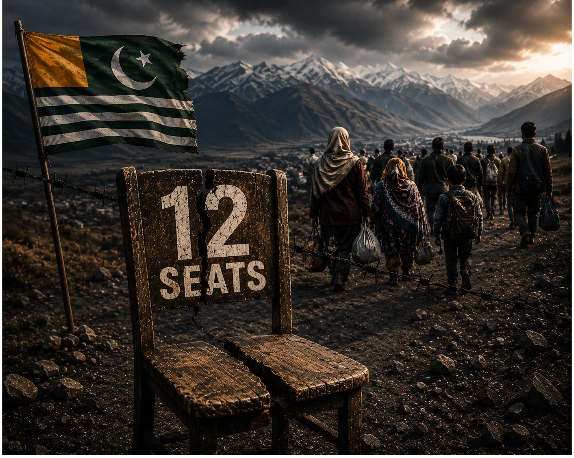
By: Kashan Fayyaz Wani The ongoing debate over the future of the 12 refugee seats in the Azad Jammu and Kashmir (AJK) Legislative Assembly extends…
Read More »
Hosts secure first-ever World Cup victory in style while Switzerland, Mexico and South Africa shape a dramatic day of tournament actionVancouver: A moment decades in the making finally arrived for Canada on Thursday night as the tournament co-hosts celebrated their first-ever FIFA World Cup victory, dismantling Qatar 6-0 in a statement performance that could mark the beginning of a new chapter in the nation's football history.According to Beyond Time News, Jonathan David produced a hat-trick masterclass as Canada overwhelmed a struggling Qatar side at BC Place Stadium, ending a World Cup drought that had stretched across two previous tournament appearances and six matches.For a generation of Canadian football fans, it was more than a victory. It was a historic breakthrough that transformed the mood around a team carrying the hopes of a nation eager to establish itself among football's elite.The emphatic result leaves Canada on the brink of qualification for the knockout stage and firmly in control of its own destiny heading into a decisive final Group B clash against Switzerland. David Delivers on Football's Biggest Stage Big moments demand big performances, and Jonathan David delivered exactly that.The Canadian forward spearheaded an attacking display that Qatar simply could not contain, scoring three times to record one of the most memorable individual performances of the tournament so far.David's movement, finishing and composure repeatedly exposed gaps in the Qatari defence, while teammates Cyle Larin and Nathan Saliba added further goals to underline Canada's superiority.An own goal from Mohammad Manai completed the scoring as the hosts ran riot in front of a jubilant crowd.The six-goal margin reflected Canada's dominance and highlighted the progress made under head coach Jesse Marsch, whose side has emerged as one of the tournament's early success stories. Historic Victory Overshadowed by Injury Concern Despite the celebrations, Canada's landmark evening was clouded by a worrying injury to midfielder Ismael Kone.The 23-year-old was forced off after a heavy challenge from Qatar's Assim Madibo early in the second half, an incident that resulted in a red card following a review by match officials.Medical staff rushed onto the pitch before Kone was stretchered off and taken to hospital for further assessment.Speaking after the match, Marsch revealed fears that the midfielder may have suffered a broken leg, a development that could deal a significant blow to Canada's campaign if confirmed.The injury visibly affected players and coaching staff, tempering celebrations after an otherwise unforgettable night.Magical Messi equals World Cup goals record as Argentina thump Algeria 3-0 Qatar's World Cup Hopes Hanging by a Thread While Canada celebrated, Qatar endured another painful setback.Already struggling to cope with the hosts' pace and intensity, the visitors found themselves reduced to ten men after Homam El-Amin was sent off in the first half for denying a clear goalscoring opportunity.Madibo's dismissal later left Qatar with only nine players, effectively ending any chance of a comeback.The heavy defeat leaves Qatar facing serious questions about its performances and qualification prospects as the group stage approaches its conclusion. Switzerland Respond with Convincing Victory Earlier in Los Angeles, Switzerland ensured the battle for top spot in Group B remains wide open with a commanding 4-1 victory over Bosnia-Herzegovina.Johan Manzambi emerged as the star of the show with two goals, while Ruben Vargas and Granit Xhaka also found the net in a dominant Swiss display.The result moved Switzerland level with Canada on four points and set up one of the most anticipated fixtures of the group stage.When the two sides meet in Vancouver, first place in Group B will be on the line.A draw would be enough for Canada to finish top thanks to a superior goal difference, while Switzerland must win to leapfrog the hosts. Mexico Become First Team Through Elsewhere, Mexico became the first nation to secure a place in the World Cup knockout rounds.The co-hosts edged South Korea 1-0 in Guadalajara to maintain their perfect start to the tournament and guarantee progression with a match to spare.Mexico's qualification further strengthened belief among supporters that the team could enjoy a deep run on home soil.Their consistency and defensive discipline have made them one of the standout performers of the opening phase of the competition. South Africa Keep Hope Alive In Atlanta, South Africa rescued a valuable point against the Czech Republic to keep its qualification hopes alive.After falling behind to a Michal Sadilek strike, South Africa responded through a Teboho Mokoena penalty to secure a 1-1 draw.Although neither side has yet secured a victory, both remain mathematically alive heading into the final round of group fixtures. Tournament Momentum Building As the group stage enters its decisive phase, the battle for places in the knockout rounds is becoming increasingly intense.Canada's historic breakthrough has emerged as one of the defining stories of the tournament so far, showcasing the growing strength of football in a country traditionally associated with other sports.Switzerland remain firmly in contention, Mexico have already advanced, and several teams continue to fight for survival.With every match carrying greater significance, the road to World Cup glory is beginning to take shape. FAQs Why is Canada's victory over Qatar historic? Canada recorded its first-ever FIFA World Cup win after previously losing all six matches played in the tournament.Who scored in Canada's 6-0 victory? Jonathan David scored a hat-trick, while Cyle Larin and Nathan Saliba added goals. Canada also benefited from a Qatar own goal.What happened to Ismael Kone? The Canadian midfielder suffered a serious leg injury and was taken to hospital after a challenge from Qatar's Assim Madibo.How did Switzerland perform against Bosnia-Herzegovina? Switzerland won 4-1, with Johan Manzambi scoring twice and Granit Xhaka among the goalscorers.Which team became the first to reach the World Cup knockout stage? Mexico secured qualification after defeating South Korea 1-0 in Guadalajara.#CanadaWorldCup #JonathanDavid #CanadaVsQatar #FIFAWorldCup2026 #Switzerland #Mexico #WorldCupNews #FootballNews #SportsNews #GroupB #WorldCupFootball #Soccer